
Data centers weather solar storms
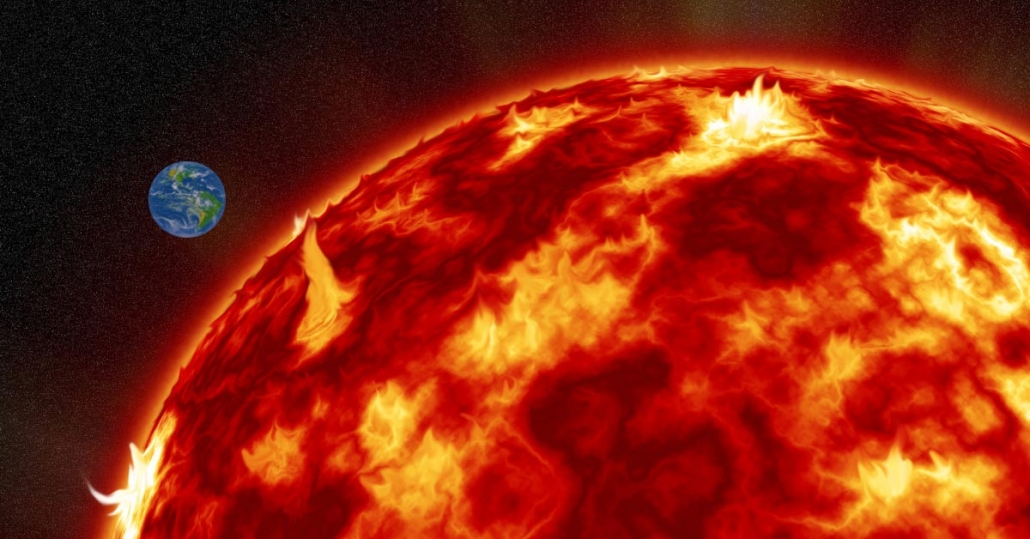
The US Space Weather Prediction Center (SWPC) issued multiple geomagnetic storm watches throughout August and September 2022. Geomagnetic storms occur when solar storms interact with the Earth’s atmosphere and magnetic field, risking disruption to satellites, radio communications and the power grid. The strongest predicted storm earned the agency’s rating of G3 (“strong”) on a five-level classification system of geomagnetic activity — intense enough to require voltage corrections on the grid in some regions. In comparison, an “extreme” G5 geomagnetic storm could overheat or destroy high-voltage transformers, leading to widespread and lasting power outages.
A geomagnetic storm represents one type of electromagnetic pulse (EMP) — a rapid discharge of electromagnetic energy. A geomagnetic storm, also known as a geomagnetic disturbance or geomagnetic EMP, has secondary effects on power consumers that expose data centers to risk of equipment disruption and damage. The three types of EMP (geomagnetic, nuclear, or intentional) vary in their physical characteristics, but each can endanger data centers (see the Uptime Institute report Electromagnetic pulse and its risk to data centers). However, many operators do not include any type of EMP in their risk assessments, and have not implemented protective measures.
The SWPC monitors solar events and can provide hours’ or days’ notice of events likely to impact Earth. The long-term prediction of an individual geomagnetic EMP event on Earth is not possible currently. Solar events that could cause geomagnetic EMP events occur frequently but chaotically; they are often directed away from Earth and astronomers can only predict them on the basis of probability. For example, a G5 (“extreme”) event typically reaches Earth once every 25 years. Such an event caused a nine-hour outage of the Hydro-Québec transmission system in 1989. An extreme geomagnetic EMP damaged 12 transformers in South Africa in 2003. Before the advent of today’s power grid, the 1859 Carrington Event (the most intense geomagnetic storm in history) caused sparking and fires at multiple telegraph stations.
Due to its low frequency, geomagnetic EMP acts most strongly on electrical conductors running miles in length, such as high-voltage transmission lines in the power grid. The induced current behaves similarly to direct current (DC) in a system designed for alternating current (AC). Most storms, such as those in late summer 2022, are not intense enough to cause power outages. Grid operators can compensate for the induced currents of a smaller EMP event and continue delivering power. Data centers may experience problems with power quality, however — specifically, harmonic distortion (defects in AC voltage waveforms). As power is transmitted from high-voltage lines to utility customers, it passes through a succession of transformers — each of which steps down the voltage but intensifies harmonics. Harmonics are at their greatest intensity once the power reaches the end user, in this case a data center.
Most data center uninterruptable power supply (UPS) systems are designed to accommodate some harmonics and protect downstream equipment, but geomagnetic EMP events can overwhelm these built-in protections — potentially damaging the UPS or other equipment. The effects of harmonics inside a data center can include inefficient UPS operation, UPS rectifier damage, tripped circuit breakers, overheated wiring, malfunctioning motors in mechanical equipment and, ultimately, physical damage to IT equipment.
Some grid operators are already installing protective devices to guard their infrastructure against geomagnetic EMP, sparing their customers the secondary effects of outages and harmonics.
Those data center operators that include EMP risk as part of an overall risk assessment can improve their infrastructure resiliency by implementing their own EMP safeguards. The primary threats to individual data centers from geomagnetic EMP —power outages and harmonics — act via the power grid. Operators can manage this risk by disconnecting from the grid and operating on backup power. Increased on-site fuel / energy storage may be appropriate in preparing for smaller geomagnetic storms.
In the event of a large geomagnetic storm, the entire population of the affected area will be competing for fuel and other supplies and prolonged power outages are likely to outlast data centers’ fuel-storage capacity. These same conditions are likely to affect users of those applications running in a data center, leaving them unable to connect. Relying on geographically dispersed multisite resiliency (stretching over thousands of miles) is likely to offer more effective protection. More localized EMP effects — from, for example, a small geomagnetic EMP or an intentional EMP — will not affect more distant locations, so there may be a stronger economic argument for maintaining availability through such events.
Awareness of EMP as a risk to data centers is increasing. Best practice in EMP protection is not well established in the data center industry yet, but periodic risk assessments will enable operators to incorporate updated information and guidelines as these become available.




 UI 2021